
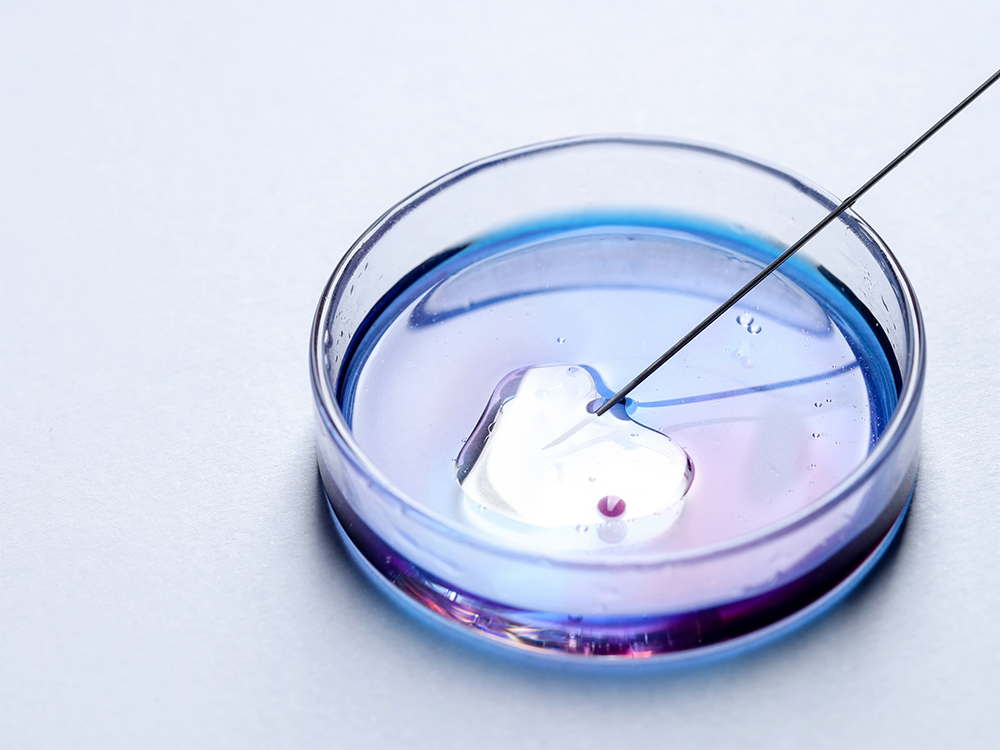
In the IVF journey, every stage requires attention. Egg retrieval (the moment in which oocytes are aspirated from the ovarian follicles) is one of the steps in which the characteristics of the instrument used come into direct contact with the patient’s biological material. A needle designed for gentle aspiration, controlled flow and precise geometry is not a simple accessory: it is an integral part of the protocol.
Egg retrieval: a critical moment often taken for granted
Controlled ovarian stimulation, ultrasound monitoring, the quality of the embryology laboratory: these are the elements that usually dominate clinical discussions on IVF. Egg retrieval is often treated as an executive step, necessary but less “central” than the stages that follow. This is an assumption worth questioning.
Oocyte retrieval takes place under transvaginal ultrasound guidance, in a context where speed, precision and gentleness must coexist. The needle must pass through the vaginal wall, reach the follicle and aspirate its contents (oocyte, follicular fluid and granulosa cells) while minimising, as far as possible, tissue trauma and dispersion of biological material. The needle’s design characteristics are one of the factors that can affect this balance.
Single-lumen or double-lumen needle: the choice that shapes the protocol
One of the most practical decisions IVF centres face concerns the choice between single-lumen and double-lumen needles. This is not a purely technical question: it reflects the centre’s approach and the patient’s characteristics.
Single-lumen needles, such as KINDER PLUS™, are designed for direct, linear aspiration, with manipulation kept to a minimum. They are often the choice in standard protocols, particularly for patients with a good follicular response.
Double-lumen needles, such as KINDER DL™, add a flushing channel, allowing the follicle to be irrigated after initial aspiration. The decision to use flushing is a clinical one, to be assessed case by case together with the medical team.
In both configurations, single or double lumen, what must be guaranteed is the build quality of the instrument: a profile designed for aspiration that is as gentle as possible, controllable flow, and biocompatible materials.
What makes a “good” retrieval needle
Beyond configuration, the quality of an oocyte aspiration needle is assessed across a few key dimensions:
- Tip geometry. A tip designed to minimise tissue resistance can help reduce trauma during follicular puncture. Dimensional tolerances must be tightly controlled during manufacturing.
- Internal lumen quality. The needle’s internal surface must be uniform, free of roughness or residues that could alter flow during the passage of biological material.
- Biocompatibility. Materials coming into contact with follicular fluid and oocytes must meet applicable biocompatibility and safety requirements. CE marking, manufacturing under an ISO 13485-certified quality management system, material traceability and appropriate testing, where applicable, contribute to demonstrating compliance with relevant regulatory and quality standards.
- Connectivity and handling. The needle must integrate easily with the aspiration systems used at the centre, and its profile must allow the clinician to work with precision even in complex anatomical conditions.
Conclusion
Egg retrieval is a brief moment in the IVF journey, but no less important for it. The needle’s design characteristics, its geometry, its materials, the quality of its internal lumen, are elements that can affect the quality of the biological material retrieved. They remain one of the many factors that make up an IVF protocol, alongside stimulation, monitoring and the experience of the clinical and embryology team. Choosing instruments built to rigorous quality standards is not an operational detail: it is part of the clinical decisions a centre makes at every stage of the journey.
Biopsybell designs and manufactures medical devices for assisted reproductive medicine.
Discover all our ART products.
